
Furnace: Difference between revisions
More actions
Starviking (talk | contribs) Cleaned up description section, removed inaccurate information such as the statement that the ores must be processed with the arc furnce before mixing in the Furnace, added section describing the functioning of the button on the from of the furnace. |
Starviking (talk | contribs) →Ice only recipes: Move individual steps for making alloy using ice into a bullet list. |
||
| Line 38: | Line 38: | ||
It features a gas [[pipe]] input port (connected to its internal storage through an internal always-open [[One_Way_Valve_(Gas)|one-way valve]]), a gas pipe output port (which lacks a one-way valve and acts as a bidirectional gas port), and a liquid output port (which acts as an always-open [[Condensation_Valve|condensation valve]]). | It features a gas [[pipe]] input port (connected to its internal storage through an internal always-open [[One_Way_Valve_(Gas)|one-way valve]]), a gas pipe output port (which lacks a one-way valve and acts as a bidirectional gas port), and a liquid output port (which acts as an always-open [[Condensation_Valve|condensation valve]]). | ||
The face of the furnace has a button that will ignite any flammable gas mixture inside furnace. If the furnace is cold any ice loaded into the input slot will not melt, however pressing the button will melt a single chunk of ice each time it is pressed. In addition the button indicates the status of any ingot or alloy mix inside the furnace. If the button is green the ore or alloy mix is within the temperature range required for smelting. | The face of the furnace has a button that will ignite any flammable gas mixture inside furnace. If the furnace is cold any ice loaded into the input slot will not melt, however pressing the button will melt a single chunk of ice each [[time]] it is pressed. In addition the button indicates the status of any ingot or alloy mix inside the furnace. If the button is green the ore or alloy mix is within the temperature range required for smelting. | ||
The contents of the furnace can be ejected by pulling the lever on the front. If the contents have not reached the required temperature and [[pressure]] for smelting, they'll come out as [[Reagent Mix]]. Reagent mix can be processed in a [[Centrifuge]] to recover the raw [[ores]]. [[Reagent Mix]] can also be re-smelted if the ingredients and ratios are a valid alloy recipe. This allows an intermission when the resources for reaching the required temperature / pressure are not on hand / need to be gathered first. Effectively, this means that the used metals can be 'reserved' for the intended alloy. | The contents of the furnace can be ejected by pulling the lever on the front. If the contents have not reached the required temperature and [[pressure]] for smelting, they'll come out as [[Reagent Mix]]. Reagent mix can be processed in a [[Centrifuge]] to recover the raw [[ores]]. [[Reagent Mix]] can also be re-smelted if the ingredients and ratios are a valid alloy recipe. This allows an intermission when the resources for reaching the required temperature / pressure are not on hand / need to be gathered first. Effectively, this means that the used metals can be 'reserved' for the intended alloy. | ||
| Line 61: | Line 61: | ||
====Ice only recipes==== | ====Ice only recipes==== | ||
Alloys can be made in the furnace by manually loading Ices into the input slot of the furnace and igniting the fuel mixture. While this method produces crude fuel mixtures and the amount of fuel is not as precisely controlled as gaseous fueling, all the basic alloys can be made using this method. The procedure is as follows. | |||
* Prepare the ice and ores by splitting them into the the correct amounts and arranging them in you [[backpack]] or mining belt. | |||
* When all the component are ready load the first set of ice chunks into the furnace.If the the ice does not melt on it's own (the input slot stays closed) press the button on the furnace's face to melt the ice. | |||
* Load the second ice into the furnace. As soon as you press the button on the front of the furnace the fuel mixture will ignite. | |||
* As soon as the furnace is lit quickly load the ores into the furnace. After all the ores are loaded wait for the button to turn green indicating the mixture has reached the correct temperature and pressure. | |||
* Pull the lever to eject the finished alloy. | |||
<div style="overflow-x: auto;"> | <div style="overflow-x: auto;"> | ||
{| class="wikitable" | {| class="wikitable" | ||
Revision as of 23:32, 20 March 2026
 | |
| Volume | 1000 L |
|---|---|
| Recipes | |
| Autolathe | 30g Iron, 10g Copper |
| Fabricator | 30g Iron, 10g Copper |
This article is about the basic furnace. For the advanced version, see Advanced Furnace.
 | |
| Operation | |
|---|---|
| Prefab Hash | 1947944864 |
| Prefab Name | StructureFurnace |
| Construction | |
| Placed with | Kit (Furnace) |
| Placed on | Small Grid |
| Stage 1 | |
| Next Stage Construction | |
| Constructed with tool | Wrench |
| Constructed with item | 2x Iron Sheets |
| Deconstruction | |
| Deconstructed with | Crowbar |
| Item received | Kit (Furnace) |
| Stage 2 | |
| Next Stage Construction | |
| Constructed with tool | Welding Torch |
| Constructed with item | 2x Iron Sheets |
| Deconstruction | |
| Deconstructed with | Crowbar |
| Item received | 2x Iron Sheets |
| Stage 3 | |
| Deconstruction | |
| Deconstructed with | Angle Grinder |
| Item received | 2x Iron Sheets |
Description
The Furnace is used to smelt ore into ingots and alloys using an fuel mixture. Gases can be fed in measured amounts directly into the furnace via the pipe inlet. Alternately Oxite and Volatiles can be manually fed into the input slot of the furnace in order to create crude gas mixtures. The Furnace can do everything the Arc Furnace can do, but without using electricity, and far more efficiently. The furnace can also be used to melt Ices which can then be directly extracted as an easy trick for melting ice.
It features a gas pipe input port (connected to its internal storage through an internal always-open one-way valve), a gas pipe output port (which lacks a one-way valve and acts as a bidirectional gas port), and a liquid output port (which acts as an always-open condensation valve).
The face of the furnace has a button that will ignite any flammable gas mixture inside furnace. If the furnace is cold any ice loaded into the input slot will not melt, however pressing the button will melt a single chunk of ice each time it is pressed. In addition the button indicates the status of any ingot or alloy mix inside the furnace. If the button is green the ore or alloy mix is within the temperature range required for smelting.
The contents of the furnace can be ejected by pulling the lever on the front. If the contents have not reached the required temperature and pressure for smelting, they'll come out as Reagent Mix. Reagent mix can be processed in a Centrifuge to recover the raw ores. Reagent Mix can also be re-smelted if the ingredients and ratios are a valid alloy recipe. This allows an intermission when the resources for reaching the required temperature / pressure are not on hand / need to be gathered first. Effectively, this means that the used metals can be 'reserved' for the intended alloy.
While the Furnace can be used to smelt basic ores and to make simpler alloys, but an Advanced Furnace will be required for the more complex alloys.
Danger: The furnace is not insulated, so it interacts with the surrounding atmosphere and can heat rooms to dangerous levels within minutes.
All the alloys the furnace can smelt are easily achieved with ice, and they can also be smelted using gases fed into the furnace through the pipe inputs. Regardless of which method is used the furnace gases must be purged thru a working piping setup (a valve and passive vent at bare minimum to vent the internal gasses).
Gaseous fuel can be premixed and fed into the furnace. This can be done by feeding Volatile ices and Oxite ices in an Ice Crusher in the correct ratio to produce fuel. There are a number of different gases mixtures.
The Furnace's output can also be extracted and vented/recycled through a backpressure regulator to maintain furnace pressure. Adding additional gases to the furnace can result in lower temperature if that is desired, but you could also use a volume pump with a lower fuel input setting.
Make sure to put the fuel in first, then press the activate button. Afterwards put in the ingredients and wait for the button to turn green. You can verify that the mixture is ready by hovering over the furnce, if "will produce xxxxx" is shown then you can extract the alloy by pulling the lever on the front. Also, You MUST put in exact amounts matching the recipe amounts. For instance, you must put in 12 iron and 4 coal to make 16 steel. You cannot put in 12 iron and 7 coal. The furnace will on produce a reagent mix if the ingredient ratios are not correct and you will have to eject the mixture or add additional resources to balance the recipe.
Smelting
Required conditions for smelting
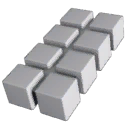
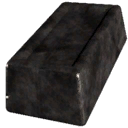
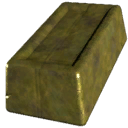
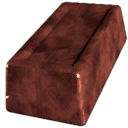
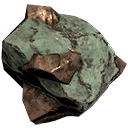
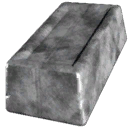
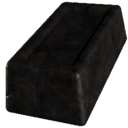
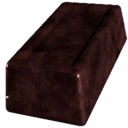
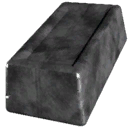
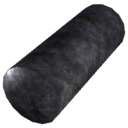
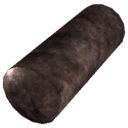
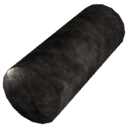
The following table shows the pressure and temperature conditions required to smelt various ores and alloys.
| Ingot | Input | Pressure (MPa) | Temperature (K) | Temperature (°C) | |||
|---|---|---|---|---|---|---|---|
| Min | Max | Min | Max | Min | Max | ||
 |
 |
0.1 MPa | 100 MPa | 580 K | 100 kK | 307°C | 99726°C |
 |
 |
0.1 MPa | 100 MPa | 900 K | 100 kK | 627°C | 99726°C |
 |
 |
0.1 MPa | 100 MPa | 800 K | 100 kK | 527°C | 99726°C |
 |
 |
0.1 MPa | 100 MPa | 600 K | 100 kK | 327°C | 99726°C |
 |
 |
0.1 MPa | 100 MPa | 600 K | 100 kK | 327°C | 99726°C |
 |
 |
0.1 MPa | 100 MPa | 600 K | 100 kK | 327°C | 99726°C |
 |
 |
0.1 MPa | 100 MPa | 400 K | 100 kK | 127°C | 99726°C |
 |
 |
0.1 MPa | 100 MPa | 800 K | 100 kK | 527°C | 99726°C |
 |
 |
1 MPa | 100 MPa | 900 K | 100 kK | 627°C | 99726°C |
 |
|
0.8 MPa | 2.4 MPa | 600 K | 100 kK | 327°C | 99726°C |
 |
|
18 MPa | 20 MPa | 1.2 kK | 1.5 kK | 927°C | 1227°C |
 |
|
20 MPa | 100 MPa | 1 kK | 10 kK | 727°C | 9726°C |
 |
|
1 MPa | 100 MPa | 350 K | 550 K | 77°C | 277°C |
| Update 0.2.2768.13597 - Thu 11/02/2021 /Recipes | |||||||
Alloy recipes
Ice only recipes
Alloys can be made in the furnace by manually loading Ices into the input slot of the furnace and igniting the fuel mixture. While this method produces crude fuel mixtures and the amount of fuel is not as precisely controlled as gaseous fueling, all the basic alloys can be made using this method. The procedure is as follows.
- Prepare the ice and ores by splitting them into the the correct amounts and arranging them in you backpack or mining belt.
- When all the component are ready load the first set of ice chunks into the furnace.If the the ice does not melt on it's own (the input slot stays closed) press the button on the furnace's face to melt the ice.
- Load the second ice into the furnace. As soon as you press the button on the front of the furnace the fuel mixture will ignite.
- As soon as the furnace is lit quickly load the ores into the furnace. After all the ores are loaded wait for the button to turn green indicating the mixture has reached the correct temperature and pressure.
- Pull the lever to eject the finished alloy.
| Ice Chunks | Ingredients | Temperature | Pressure | Alloy |
|---|---|---|---|---|
  |
|
950 K | 6.82 MPa | |
| |
|
1.72 kK | 20.8 MPa | |
| |
|
1.43 kK | 18.7 MPa | |
| |
|
1020 K | 840 KPa | |
  |
|
526 K | 1.26 MPa | |
*** Ingots are used instead of raw ores to prevent the production of extra gases when making these recipes
Gaseous Fuel Recipes

In this setup fuel is pumped into the furnace from either pre-measured canisters or pumped into the furnace in measured amounts. Fuel and be any number of gas mixtures.
The gas should be pumped into the furnace and ignited; the ores should be placed in the furnace as soon as the gases are ignited. It is not necessary to wait for the furnace to come up to temperature. Make sure to put the fuel in first, then press the activate button. Afterwards put in the ingredients and wait for the button to turn green again, until you see the "will produce" while hovering over the furnace. Then pull the handle and your alloy will be ejected.
Dirty fuel
Dirty Fuel is a 2:1 mixture of Volatile and Oxites gases. The table below shows the correct pressures of gases to load into a canister, but currently omits Hydrogen and Nitrogen quantities.
| Canister Pressure @ 0°C | Gases | Ingredients | Temperature | Pressure | Alloy |
|---|---|---|---|---|---|
 1,500 KPa |
  |
|
907 K | 4.72 MPa | |
| 2,700 KPa |
|
|
907 K | 9.28 MPa | |
| 250 KPa |
|
|
695 K | 1.62 MPa | |
| 45 KPa |
|
|
407 K | 1.07 MPa | |
| (2x) 7,500 KPa |
|
|
1.83 kK | 20.5 MPa | |
| (2x) 6,000 KPa  (2x) 9,500 KPa |
|
|
1.38 kK | 19.2 MPa | |
^^^These recipes use CO2 @ 0°C as a pressurant. Other pressurants such as Nitrogen, Pollutants, and Oxygen are possible, but they may result in different outcomes.
Tips
- If atmosphere inside and/or around furnace is too cold to melt ice one can press 'activate' button to manually melt one ice per ignition attempt. You will need to press the ignition button for each piece of ice from the first stack that you put in. Until all solid matter was melted the import slot will remain blocked.
- Reagent Mix can be re-melted to continue balancing the recipe should you need to gather more resources or find yourself unable to balance the temperature/pressure manually.
- On Vulcan the daytime temperatures allow smelting of many basic alloys right from the start by using an active vent, even high enough for Steel. This will save the very valuable, and limited oxygen of the player, especially on brutal start conditions.
- Placing 50 silver ore into an ignited furnace will produce 50 Mol of N2O inside the furnace, which can be further burned in the presence of volatiles resulting in a higher temperature after smelting. This will push the furnace temperature beyond what may be otherwise obtainable (early game daytime Vulcan, for example).
Additional fuel mixes
| Prime | FAR | In: Mols | Result | Out: Mols | ||||||
|---|---|---|---|---|---|---|---|---|---|---|
| H2 | O2 | Press. | Celcius | Kelvin | O2 | H2 | Co2 | X | ||
| 100 kPa | 2:1 | 29 | 14 | 2 135 | 1 953 | 2 216 | 1 | 3 | 82 | 33 |
| 200 kPa | 2:1 | 59 | 29 | 4 500 | 2 000 | 2 273 | 1 | 5 | 169 | 80 |
| 200 kPa | 3:1 | 65 | 21 | 3 400 | 1 900 | 2 173 | 2 | 26 | 118 | 52 |
| 200 kPa | 4:1 | 72 | 18 | 3 000 | 1 800 | 2 273 | 1 | 40 | 99 | 42 |
| 200 kPa | 1:1 | 43 | 43 | 3 493 | 1 917 | 2 190 | 22 | 2 | 127 | 59 |
| 200 kPa | 1:4 | 17 | 68 | 1 646 | 1 319 | 1 592 | 63 | 2 | 50 | 18 |
| 300 kPa | 2:1 | 86 | 42 | 6 850 | 2 109 | 2 382 | 2 | 7 | 242 | 115 |
| 902.7 kPa | 2:1 | 263 | 108 | 19.25 MPa | 2 054 | 2 357 | 70 | 7 | 767 | 151 |
| 1 MPa | 2:1 | 291 | 120 | 21.62 MPa | 2 061 | 2 334 | 74 | 7 | 862 | 170 |
| 1.497 MPa | 2:1 | 408 | 204 | 35.34 MPa | 2 121 | 2 394 | 10 | 20 | 1163 | 581 |
Ore Off-Gassing
Ores being smelted release gases, unless they have been previously sent through a furnace or centrifuge. However both the centrifuge and arc furnace require additional time and energy to remove gases from ores, and the gases will be lost. These gases will increase pressure and lower temperature inside the furnace, but can also be beneficial to the smelting process. For example Solder, requires very little fuel to smelt due to the N20 released from the Lead Ore during smelting. Removing the N20 from the lead ore prior to smelting will result in the need for additional fuel to make up for it's loss.
CAUTION: As Vol is far more reactive with N2O and burns at a rate of 1:1, rather than 2:1 with O2, be cautious to not add additional volatiles after smelting silver or lead ores. Doing so could lead to rapid spikes in pressure and, not managed properly, could lead to a furnace exploding.
| Ore | Out: Mols | |||||
|---|---|---|---|---|---|---|
| Vol | X | N2 | CO2 | O2 | N2O | |
| |
8.0 | 4.0 | 0.0 | 0.0 | 0.0 | 0.0 |
| |
0.0 | 3.0 | 0.0 | 10.0 | 0.0 | 0.0 |
| |
0.0 | 1.0 | 1.0 | 1.0 | 0.0 | 0.0 |
| |
0.0 | 2.0 | 0.0 | 0.5 | 0.0 | 0.0 |
| |
0.0 | 2.0 | 0.5 | 0.2 | 0.2 | 0.0 |
| |
0.0 | 1.0 | 0.5 | 1.0 | 0.0 | 0.0 |
| |
0.0 | 1.0 | 0.4 | 0.0 | 0.0 | 1.0 |
| |
0.0 | 2.0 | 1.0 | 0.4 | 0.0 | 0.4 |
| |
0.0 | 1.0 | 0.5 | 1.0 | 0.0 | 0.0 |
 |
1.0 | 0.0 | 3.0 | 0.0 | 0.0 | 0.0 |
Data Network Properties
These are all Data Network properties of this device.
Data Parameters
These are all parameters that can be written with a Logic Writer, Batch Writer, or Integrated Circuit (IC10).
| Parameter Name | Data Type | Description |
|---|---|---|
| Activate | Boolean | Activates the Furnace, when set to 1. |
| ClearMemory | Boolean | When set to 1,clears the counter memory(e.g.ExportCount). Will set itself back to 0 when actioned. |
| Lock | Boolean | Locks the Furnace, when set to 1. Unlocks it when set to 0. |
| Mode | Integer | Returns whether the Furnace is smelting. (0 for no, 1 for yes). |
| Open | Boolean | Opens the Furnace, when set to 1. Closes it, when set to 0. |
| Setting | Float | (Unknown) Affects the Setting output. |
Data Outputs
These are all parameters, that can be read with a Logic Reader or a Slot Reader. The outputs are listed in the order a Logic Reader's "VAR" setting cycles through them.
| Output Name | Data Type | Description |
|---|---|---|
| Activate | Boolean | Returns if the furnace is active. |
| Combustion | Boolean | Returns 1 if the furnace atmosphere is on fire. |
| ExportCount | Integer | How many items exported since last ClearMemory. |
| ImportCount | Integer | How many items imported since last ClearMemory. |
| Lock | Boolean | Returns whether the Furnace is locked. |
| Maximum | Integer | (Unknown) Returns 100. |
| Mode | Integer | Returns whether the Furnace is smelting. (0 for no, 1 for yes). |
| Open | Boolean | Returns whether the Furnace is open. (0 for no, 1 for yes). |
| PrefabHash | Integer | The hash of the structure. |
| Pressure | Float | Returns the pressure in the Furnace in kilo pascal. |
| Ratio | Float | (Unknown) Returns 0.5. |
| RatioCarbonDioxide | Float | Returns a range from 0.0 to 1.0. Returns the percentage ratio of the amount of carbon dioxide in the Furnace. |
| RatioNitrogen | Float | Returns a range from 0.0 to 1.0. Returns the percentage ratio of the amount of nitrogen in the Furnace. |
| RatioNitrousOxide | Float | Returns a range from 0.0 to 1.0. Returns the percentage ratio of the amount of nitrous oxide in the Furnace. |
| RatioOxygen | Float | Returns a range from 0.0 to 1.0. Returns the percentage ratio of the amount of oxygen in the Furnace. |
| RatioPollutant | Float | Returns a range from 0.0 to 1.0. Returns the percentage ratio of the amount of pollutant in the Furnace. |
| RatioVolatiles | Float | Returns a range from 0.0 to 1.0. Returns the percentage ratio of the amount of volatiles in the Furnace. |
| RatioWater | Float | Returns a range from 0.0 to 1.0. Returns the percentage ratio of the amount of water in the Furnace. |
| Reagents | Float | Returns the amount of reagents (smeltable ores, not counting ice) in the Furnace, in grams. |
| RecipeHash | int | Current hash of the recipe the device is set to produce. |
| Setting | Float | (Unknown) Affected by the Setting parameter. |
| Temperature | Float | Returns the temperature in the Furnace in kelvin. |
| TotalMoles | Float | Returns the total moles of the furnace. |